Boise Solid Concrete Contractor referrals · Treasure Valley

Boise · Meridian · Nampa · Eagle · Kuna

Boise Solid Concrete: Concrete Contractors in Boise, ID

Boise Solid Concrete is a free referral service for people in Boise, Meridian, Nampa, Eagle and the rest of the Treasure Valley who need concrete work done. Describe the job once and the request goes to independent local concrete contractors. They visit, measure and quote; you decide whether to hire anyone. Below: what driveways, patios and slabs involve on Treasure Valley ground, what national cost guides say, and which office signs off on what.

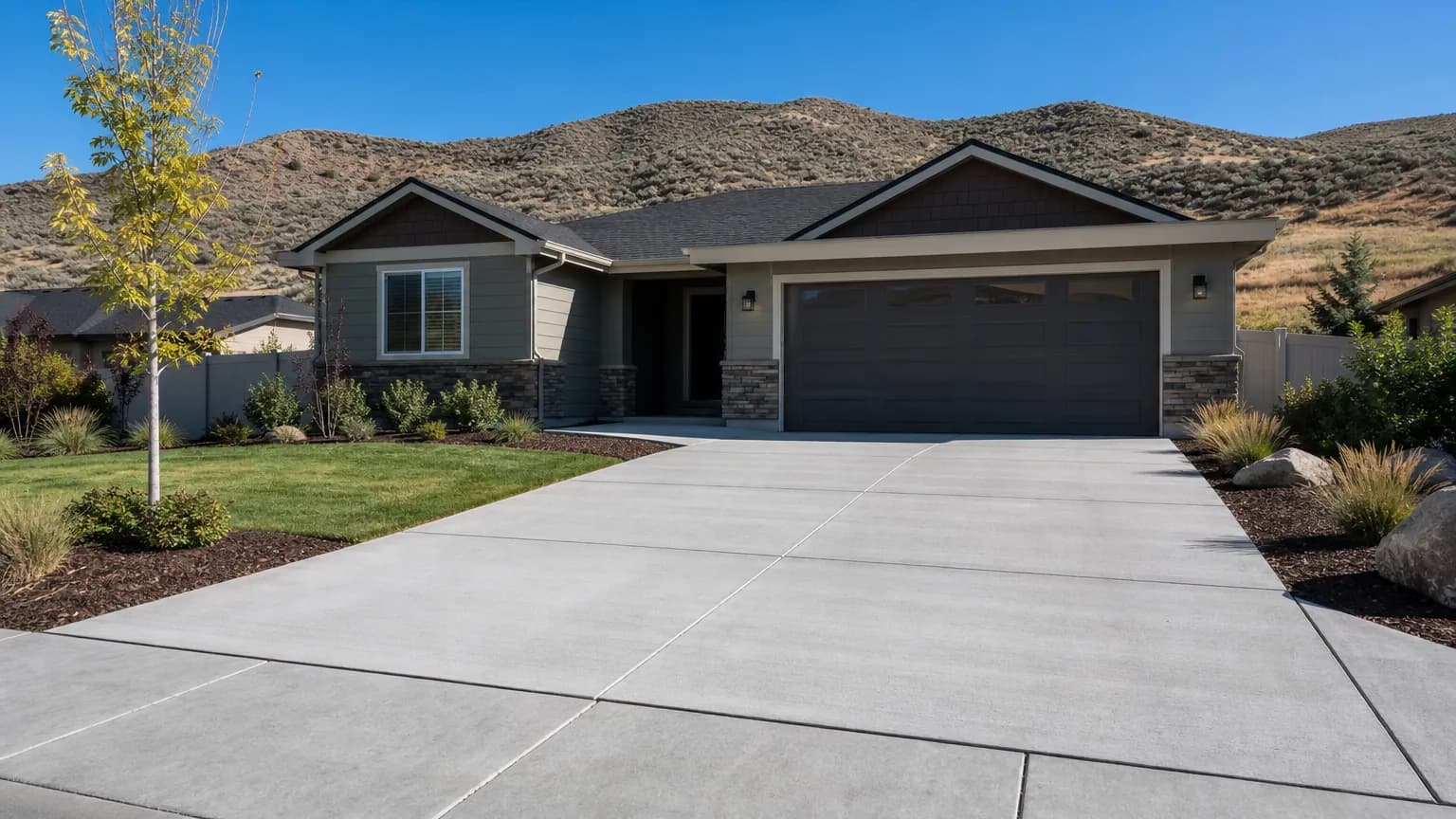
New light gray broom-finish concrete driveway with saw-cut joints in front of a single-story home, with sagebrush foothills behind
  • No cost to askSending a request is free and does not commit you to anything.
  • Local, independent contractorsRequests go to contractors who work in Ada, Canyon and Gem counties.
  • You hire directlyCompare written quotes and contract with the one you choose, or nobody.
  • Referral onlyBoise Solid Concrete does not pour, repair or take payment for concrete work.

Concrete Driveways in Boise

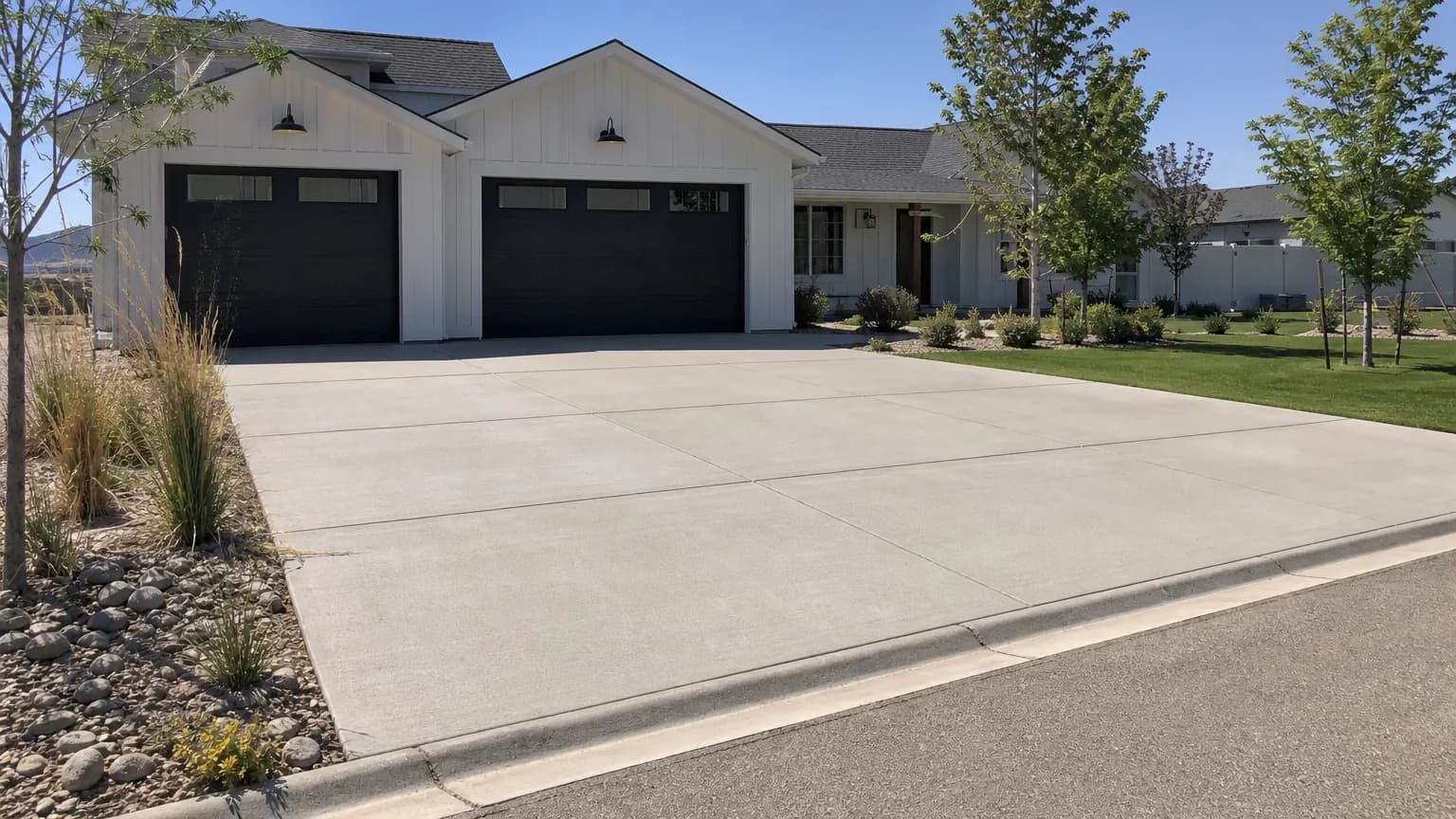
Most calls start with the driveway. For cars and light trucks the usual floor is a 4-inch slab, saw-cut into panels so shrinkage cracks follow the cuts instead of wandering. A common spacing rule is 24 to 36 times the thickness in inches, which puts joints roughly 8 to 12 feet apart on a 4-inch pour, cut a quarter of the way through. In a valley where most January nights freeze, the mix matters as much as the layout: air-entrained concrete around 4,000 psi with a low water-to-cement ratio is the common recommendation for freeze-thaw country.

Boise treats a driveway differently from most flatwork. The city's homeowner guide says a driveway needs no building permit but does need Planning and Zoning approval, and the zoning code limits a driveway inside the front setback to 20 feet wide in many residential districts. Where the driveway meets the street, the approach belongs to the Ada County Highway District. The concrete driveways guide walks through all three.

Questions worth asking at the walk-through

  • What thickness and what mix, and is the concrete air-entrained?
  • What will you find under the topsoil here, and how deep does the base go?
  • Where do the joints go, and are they sawed or tooled?
  • Who files the ACHD driveway approach request if the curb cut changes?
  • Is tear-out and haul-off of the old slab part of this number?

Patios and Backyard Flatwork

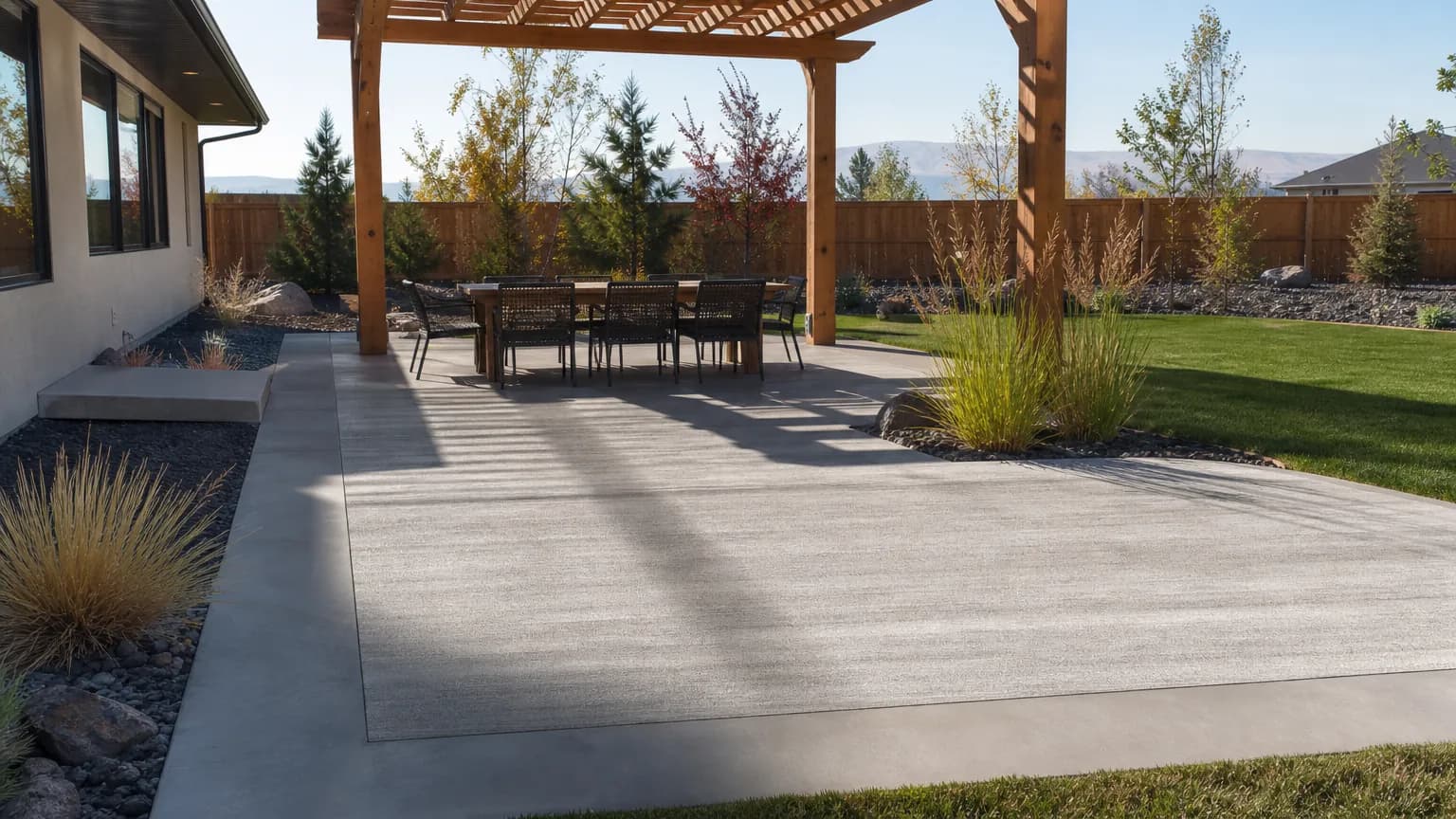
A concrete patio is the second most common job. Broom finish is the baseline; a smooth troweled border, integral color, a stamped pattern or exposed aggregate add cost and character. National guides put patios at about $5 to $18 per square foot, plain to custom. A 14 by 18 foot slab is 252 square feet, so that range works out to roughly $1,260 to $4,536 before anything unusual about the site.

Two Boise details shape patio plans. First, height: the city requires a building permit for a concrete patio more than 12 inches above grade, a lower trigger than the 30 inches that applies to walks and driveways. Second, water: most Treasure Valley subdivisions run pressurized irrigation from canal water through the summer, and a patio poured where sprinkler overspray or a downspout keeps the edge wet is a patio that settles. Slope the slab away from the house and plan where the water goes before the forms go in.

Shop Slabs, Hot Tub Pads and Garage Floors

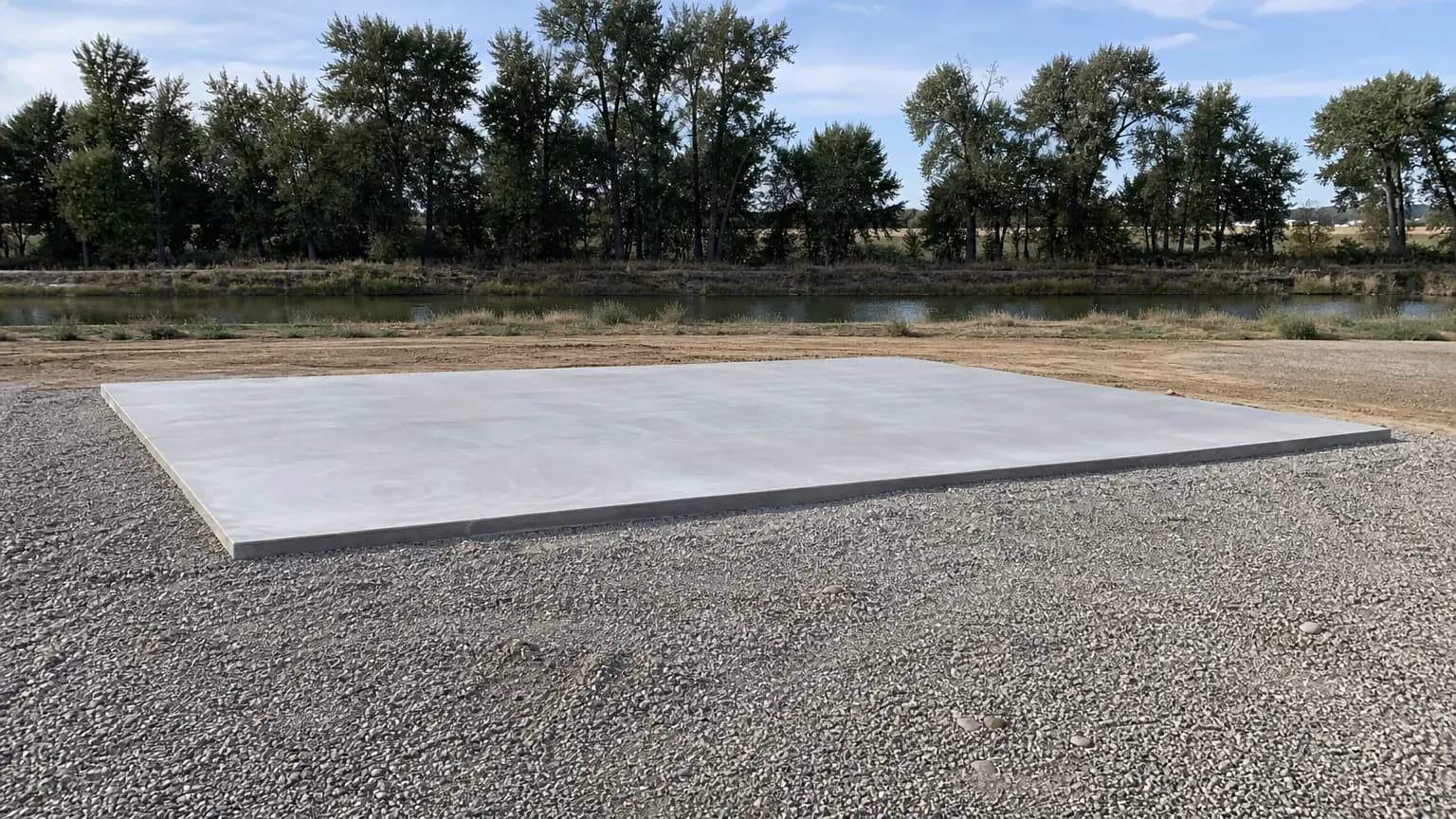
The pages people search hardest in the Boise area are about slabs: what it costs to pour a pad for a shop, a pole barn, an RV, a shed or a hot tub. National ranges run about $4 to $12 per square foot depending on thickness, reinforcement and prep. A 30 by 30 foot shop floor is 900 square feet, which at that range is roughly $3,600 to $10,800, and the thickness, the edge footing and the base under it move the number more than anything else.

Buildings change the rules. A slab that carries a building usually needs thickened edges or footings, and Boise's code sets frost protection at 24 inches below finished grade for foundations that require it. A slab that only carries a hot tub does not need footings, but it does need to be flat, thick enough for the filled weight and set on compacted base. The concrete slabs guide covers sizes, thickness and what a contractor needs to know to quote one.

What Concrete Costs Around Boise

No source we could check publishes Boise-specific concrete prices, so the ranges below are national installed figures from cost guides such as HomeGuide, Angi and HomeAdvisor. Local contractors typically quote inside or near these bands, and the only number that counts is a written quote for your site.

JobTypical national range (installed)
Plain broom-finish driveway$6–$12 per sq ft
Stamped concrete$12–$25 per sq ft
Patio, plain to custom$5–$18 per sq ft
Slab or pad$4–$12 per sq ft
Sidewalk or walkway$6–$14 per sq ft
Tear-out of old concrete$2–$6 per sq ft
Resurfacing overlay$3–$9 per sq ft
Slab leveling (mudjacking)$3–$8 per sq ft

What moves a quote: thickness and mix, how much digging the base needs (caliche can turn a one-day excavation into two), access for a truck or pump, tear-out, finish, and any work in the public right-of-way. Line up quotes for the same scope before comparing totals.

Treasure Valley Ground: Caliche, Clay and River Gravel

Soil scientists have described caliche, a calcium-carbonate hardpan, on the lower, middle and upper terraces of the Boise and Snake rivers since at least the 1960s. It forms where rainfall is low, as water evaporates and leaves lime behind, and Boise gets about 11.5 inches of precipitation a year. A caliche layer can be hard enough to stop a shovel. For a slab that is mostly good news underneath and bad news during excavation: it bears weight well, but it can block drainage and slow digging for footings.

Not every lot sits on caliche. Bench neighborhoods are known for heavier clay. Lots near the Boise River often sit on silty sand and river gravel, sometimes with groundwater close to the surface. Boise's hillside standards even list collapsible soils, silts that lose volume when soaked, among the conditions that trigger extra review. Two neighbors a half mile apart can need different base prep, which is why a contractor should look at the ground before writing a firm number.

Freeze, Thaw and the First Winter

Boise summers are hot, with July highs averaging about 92 to 93°F and roughly 55 days a year at 90°F or more, so summer pours start early and need about a week of moist curing. Winters are the harder test. The January average low is about 25°F, the valley sees more than 100 frost nights a year, and the airport averages about 17.6 inches of snow. Water that gets into concrete and freezes expands, and repeated cycles flake the surface. That flaking is called scaling.

Air entrainment protects against that, but only once the concrete has matured. Industry guidance is to keep all deicers off new concrete through its first winter and use sand for traction instead. Even after that, salts are hard on concrete, and a penetrating silane or siloxane sealer is the common cold-climate recommendation. If your pour lands in October or November, ask how the contractor protects it from overnight freezes.
Permits: City Hall, ACHD and Canyon County

Boise's code exempts sidewalks and driveways not more than 30 inches above adjacent grade from a building permit, as long as they are not over a basement or part of an accessible route. Patios more than 12 inches above grade need one. Retaining walls need one at 4 feet or more, measured from the bottom of the footing, or at 2 feet when the wall holds back a slope or other surcharge. Meridian's handout lists the same 4-foot wall threshold.

The street side is a separate agency. In Ada County, the Ada County Highway District owns the right-of-way, and new or changed driveway approaches go through an ACHD Driveway Approach Request and permit; the permit holder must be licensed and bonded for right-of-way work. Meridian also requires a temporary use permit for work in the public right-of-way. In Canyon County, the street may belong to the city (Nampa issues its own right-of-way permits) or to one of four highway districts. Confirm with the right office before work starts.

Repair, Leveling or Replacement

Not every bad slab needs to go. Hairline cracks and small spalls on an otherwise sound slab can be routed, filled and sealed. A panel that has dropped at one joint can often be raised by mudjacking or foam injection, at about $3 to $8 per square foot nationally for mudjacking. A slab that has scaled but is structurally sound can take a resurfacing overlay, typically $3 to $9 per square foot. Replacement makes sense when the concrete is broken into many pieces or keeps moving.

A rough sorting guide

What you seeUsually starts with
Hairline or stable cracksCrack repair and sealing
Flaking, pitted surface after winters of saltResurfacing, if the slab is sound
One panel sunk at a joint, trip lipLeveling
Many broken pieces, heaving, repeated settlingTear-out and replacement

Retaining Walls and Foothill Lots

North and east Boise climb into the foothills, and Eagle, Hidden Springs and Harris Ranch all have sloped lots. Retaining walls there are poured concrete or segmental block, with gravel and a drain behind the wall so water does not build pressure. Concrete retaining walls run about $20 to $60 per square foot of wall face nationally. In Boise, a wall 4 feet or taller from the bottom of the footing needs a permit, and so does a 2-foot wall holding back a slope; those cases need engineering.

Steeper ground brings in the city's hillside standards, which apply where slopes exceed 15 percent or where slope stability, groundwater, erosion, or expansive or collapsible soils are a concern. A contractor working on a foothills lot should be comfortable talking about drainage, footing depth and when an engineer is needed.

Hiring in Idaho, and How Boise Solid Concrete Works

In Idaho, anyone who contracts for construction work over $2,000 must be registered with the Idaho Contractors Board, part of the Division of Occupational and Professional Licenses (DOPL). Registration requires proof of general liability insurance of at least $300,000 and workers' compensation coverage or an exemption. Ask any contractor for the registration number and look it up with DOPL at dopl.idaho.gov.

  • On a home project over $2,000, Idaho Code 45-525 requires the general contractor to give you a written disclosure before you sign: your right to lien waivers from subcontractors, to proof of liability and workers' comp coverage, to buy extended title insurance and to require a surety bond at your expense.
  • Get thickness, mix, base prep, joint layout, finish, sealer, cleanup and who pulls permits in writing.
  • Compare at least two quotes for the same scope.

Boise Solid Concrete is a referral service, not a contractor, and it is not registered as one. It does not pour, repair, quote, schedule or guarantee anything. You send a request, it goes to independent contractors who work in your area, and any quote, contract and payment is between you and the contractor you choose.

Free request

Ready for quotes? Start with one request.

Tell us the city, the job and a rough size. Boise Solid Concrete passes the request to independent concrete contractors who work in that part of the Treasure Valley. They reach out to look at the site and quote in writing. Any agreement is between you and the contractor you pick.

  1. 1Send one requestCity, job and size. Photos help.
  2. 2A contractor follows upThey call or email to see the site and write a quote.
  3. 3You chooseHire, compare or walk away. You deal with the contractor directly.
(208) 591-6344

Get contractor quotes

Boise Solid Concrete is a referral service, not a licensed contractor. It is not registered as a contractor with the Idaho Division of Occupational and Professional Licenses and does not pour, repair or install concrete. Requests are passed to independent local concrete contractors, and each contractor is solely responsible for its own Idaho registration, work, permits, insurance, warranties and pricing. Sending this form shares your request with an independent concrete contractor who works in your area so they can contact you about the project. See the privacy policy.

Questions

Concrete Questions From Treasure Valley Homeowners

How do I find a concrete contractor near me in Boise?

Send one request with your city, the job and a rough size. Boise Solid Concrete passes it to independent concrete contractors who work in that part of the Treasure Valley, and they contact you to quote. Requests are free.

Is Boise Solid Concrete a concrete company?

No. It is a referral service. It does not pour, repair, quote or warranty work. You contract with and pay the contractor directly.

Does a concrete contractor need a license in Idaho?

Idaho requires contractor registration: anyone contracting for construction work over $2,000 must be registered with the Idaho Contractors Board through DOPL, with liability insurance and workers' comp on file. Look the registration up at dopl.idaho.gov.

Do I need a permit to pour a driveway in Boise?

Not a building permit, if it is not more than 30 inches above grade, but Boise's homeowner guide says driveways need Planning and Zoning approval, and changes to the approach at the street go through ACHD.

When is the best time to pour concrete in Boise?

Spring through early fall is easiest. Summer pours start early to beat the heat and need about a week of moist curing. Late-fall pours need protection from overnight freezes, and new concrete should go its first winter without deicers.

What does a concrete driveway cost?

National guides put plain broom-finish driveways at about $6 to $12 per square foot installed and stamped work at about $12 to $25. Boise prices come from local quotes for your site.

CallGet contractor quotes